
Da Nang Advances the Development of Ngoc Linh Ginseng from a National Product to a Global Brand
On the morning of August 2, under the direction of the Da Nang People's Committee, the Da Nang Department of Science and Technology, in collaboration with the National Institute of Medicinal Materials (Ministry of Health), THACO AGRI, Tra Linh Medicinal Materials Joint Stock Company, and the VTV8 – Thanh An Media Consortium, organized the International Scientific Conference entitled "Ngoc Linh Ginseng – From a National Product to a Global Brand."
The conference brought together more than 60 international delegates and over 200 domestic participants, including leaders from central government ministries and agencies; representatives of research institutes, universities, and science and technology organizations; leading experts in medicinal materials, traditional medicine, biotechnology, agriculture, and intellectual property; as well as representatives from local governments, businesses, cooperatives, and investors from both Vietnam and abroad.
.jpg)
Overview of the Conference
The conference was a flagship event of the Da Nang Ngoc Linh Ginseng and International Medicinal Herbs Festival 2026, serving as a platform to connect knowledge, strengthen international collaboration, and explore sustainable solutions for the development of Vietnam's medicinal herb industry, with Ngoc Linh Ginseng positioned as its flagship product.
Discussions focused on assessing the current status, potential, and challenges surrounding the conservation and development of Ngoc Linh Ginseng; presenting the latest research findings; facilitating knowledge exchange among policymakers, scientists, and industry leaders; and proposing strategies to expand cultivation areas, promote deep processing, accelerate product commercialization, and broaden export markets.
Da Nang Poised to Become a Leading Hub for the Medicinal Herb Industry
.jpg)
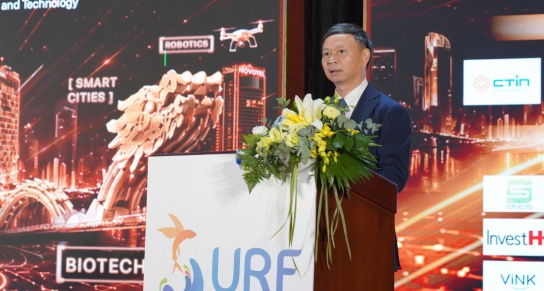
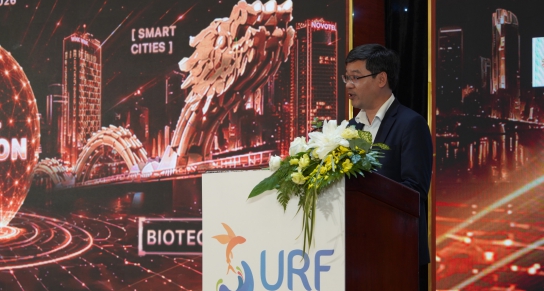
Mr. Ho Quang Buu, Vice Chairman of the Da Nang People's Committee, delivers the opening remarks.
In his opening remarks, Mr. Ho Quang Buu, Vice Chairman of the Da Nang People's Committee, highlighted that following the expansion of its administrative boundaries, Da Nang now covers more than 11,800 square kilometers, encompassing a diverse range of ecosystems—from coastal and lowland areas to mountainous regions. This unique natural landscape provides ideal conditions for cultivating valuable medicinal plants, particularly Ngoc Linh Ginseng.
An endemic species of Vietnam, Ngoc Linh Ginseng is found primarily in the Ngoc Linh mountain range at elevations between 1,500 and 2,100 meters above sea level. Scientific studies have identified 126 compounds, including 87 saponins, many of which are unique to Ngoc Linh Ginseng. These distinctive bioactive compounds underpin its exceptional medicinal value and provide a significant competitive advantage in the global market.
In addition, Da Nang is home to more than 800 medicinal plant species, concentrated mainly in its mountainous areas. This rich biodiversity represents a valuable natural resource for developing the medicinal herb industry while creating sustainable livelihood opportunities for local communities.
Currently, the city has approximately 1,500 hectares dedicated to Ngoc Linh Ginseng cultivation, making it one of the largest growing regions for the species in Vietnam. Da Nang is also investing in a comprehensive ecosystem for the medicinal herb industry, including scientific research, genetic resource conservation, seedling development, deep processing, and product commercialization, with the long-term vision of establishing a national-scale medicinal herb industry hub.
Strengthening Policy Frameworks to Unlock the Full Value of Vietnam's "National Treasure"
Ngoc Linh Ginseng (Panax vietnamensis) was discovered in 1973 in the Ngoc Linh mountain range and is recognized as one of the world's most valuable medicinal ginseng species. Endemic to Vietnam and distinguished by its unique genetic resources and high concentration of bioactive compounds, Ngoc Linh Ginseng has been designated both a National Product and a "National Treasure" of Vietnam.
To unlock the full potential of this precious medicinal herb, the Vietnamese Government has introduced a number of major policy initiatives, most notably the Vietnamese Ginseng Development Program through 2030, with a Vision to 2045, and the project entitled "Developing a Medicinal Herb Industry Center in Quang Nam (now Da Nang City), with Ngoc Linh Ginseng as the Flagship Crop."
Building on these national initiatives, the Da Nang city government has implemented a range of programs and policies to conserve genetic resources, expand cultivation areas, promote scientific research, support product development, strengthen intellectual property protection, and establish a comprehensive value chain for the medicinal herb industry.
Despite these efforts, the sector continues to face a number of challenges, including the relatively small scale of production, the underdevelopment of deep-processing technologies, limited value chain integration, and the growing need to conserve and sustainably manage valuable medicinal plant resources.
Advancing Science, Technology, and International Collaboration
At the conference, experts from South Korea, China, and other countries with well-established ginseng industries shared their experience in developing integrated value chains, standardizing product quality, expanding cultivation areas, implementing policy mechanisms to support enterprises, building national brands, and promoting exports to international markets.
.jpg)
.jpg)
Speakers presenting their papers at the conference.
The scientific presentations also highlighted a number of key areas, including the conservation of genetic resources; propagation through tissue culture, sexual reproduction, and stem cuttings; the development of sustainable forest-understory cultivation models; and the application of biotechnology to pest management and yield improvement. In addition, speakers emphasized the use of Blockchain and the Internet of Things (IoT) for cultivation area management, product traceability, and enhancing transparency across the entire value chain.
The conference also showcased a range of research achievements in deep processing technologies, including the nano-encapsulation of bioactive compounds and the development of value-added products such as soft capsules, herbal teas, and functional beverages. These innovations are expected to increase the economic value of Ngoc Linh Ginseng while strengthening the international competitiveness of products bearing the Ngoc Linh Ginseng brand.
.jpg)
MOU Signing Ceremony
In addition, leaders of the Da Nang People's Committee held a working session with international experts, scientists, and partners to discuss potential areas of cooperation in research, conservation, cultivation area development, the application of science and technology, and the commercialization of Ngoc Linh Ginseng products.
The discussions focused on sharing international best practices, exploring cooperation models suited to Vietnam's practical context, and strengthening connections among research institutions, enterprises, and investors. These efforts aim to accelerate the development of Vietnam's medicinal herb industry through innovation, sustainability, and deeper international integration.
.jpg)
Meeting with Professor Yang Deok Chun
.jpg)
Meeting with the Delegation from Chungcheongnam Province, the Geumsan Ginseng Association, and the Vietnam–Korea Business and Investment Association
At present, the "Ngoc Linh" Geographical Indication (GI) has been granted for fresh Ngoc Linh Ginseng roots produced in designated areas of Da Nang City and Quang Ngai Province. The city is continuing to study the expansion of the geographical indication coverage while also developing a certification mark for processed Ngoc Linh Ginseng products to enhance their commercial value and strengthen brand protection.
The conference not only provided a platform for dialogue and collaboration among policymakers, scientists, businesses, and international organizations, but also contributed to strengthening the scientific and practical foundation for formulating policies and mechanisms to support the next phase of Vietnam's medicinal herb industry.
Building on the recommendations, initiatives, and partnership models presented at the conference, Da Nang aims to attract greater investment, foster innovation, expand cultivation areas linked to modern processing industries, and gradually establish a comprehensive medicinal herb ecosystem. These efforts will further reinforce the city's role as a leading center for research, innovation, and international cooperation in the medicinal herb sector in Central Vietnam and nationwide, while advancing Ngoc Linh Ginseng as a globally recognized Vietnamese medicinal herb brand.
Photo Highlights
.jpg)
.jpg)
.jpg)
.jpg)